Independent solar advice · Devon & Somerset · Available 24/7
07973 710352
The Solar Broker
07973 710352Book Free Consultation
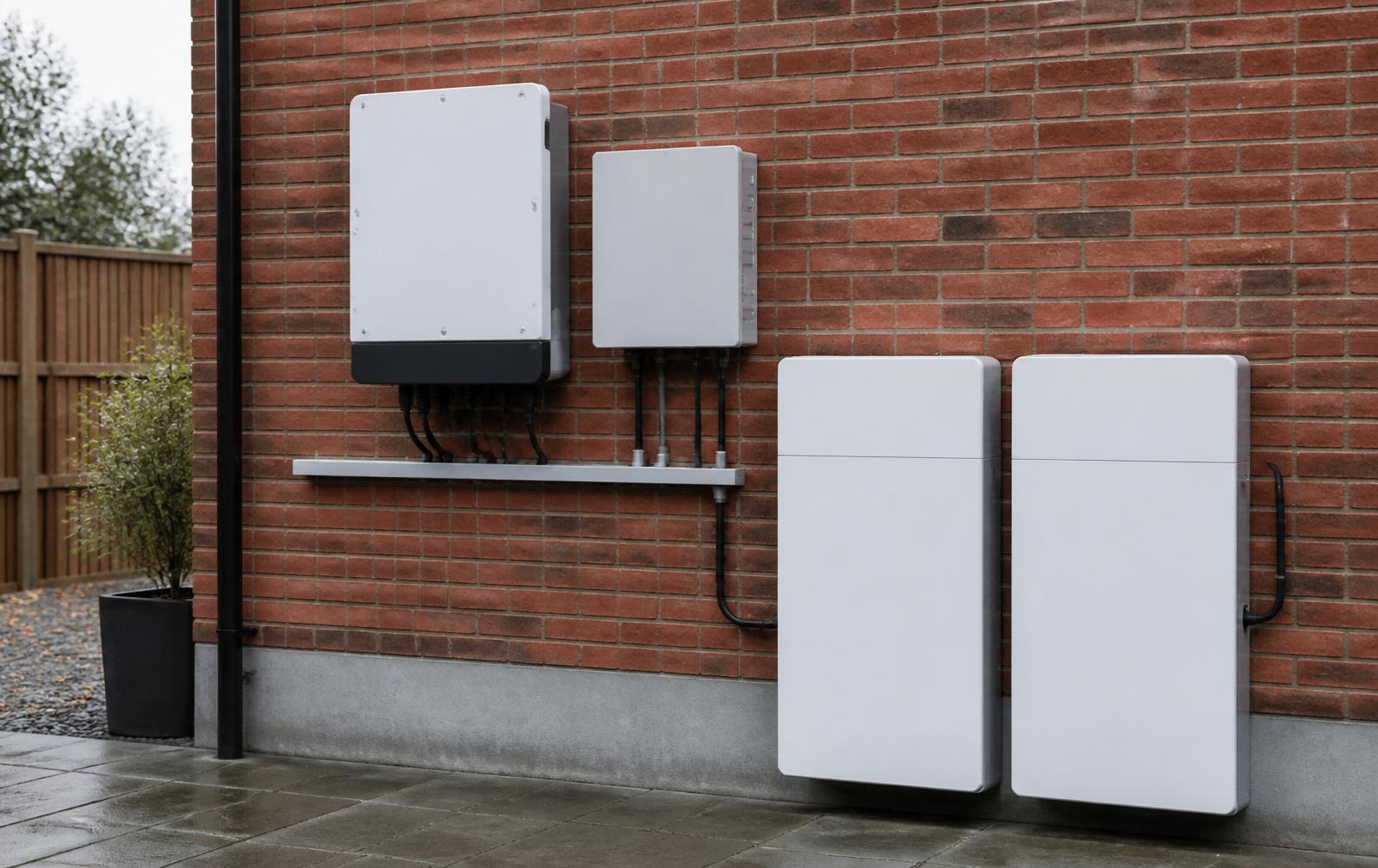
Home backup power setup on a brick wall, hybrid inverter and gateway enclosure with two wall-mounted lithium battery units
Gateway & Backup Power · Devon & Somerset

Whole-Home Backup Power.
Self-Sufficient Solar. Grid-Independent When It Matters.
Designed For Devon & Somerset Homes.

A gateway takes your solar and battery from a bill-cutting tool to a genuine grid hedge, powering the whole house through outages, and still exporting to the grid on the days it can. We design it around your circuits, not around a brochure.

MCS-vetted installers · Whole-home backup design · Independently underwritten guarantees · £1M Public Liability

MCS-vetted installer panel£1M Public Liability insuranceDBS CertifiedEPVS registered installersIndependently underwritten guarantees
The service

Gateway, Energy Self-Sufficiency, what it is, who it is for, and why professional advice matters.

Grid outages in the South West are not frequent, but when they happen, usually in the middle of a winter storm, they last longer than most homeowners expect. A gateway system takes a standard solar and battery install and turns it into something that keeps the house running: heating, lighting, cooking, working from home, and the freezer that would otherwise defrost silently overnight.

What it is

A gateway is a piece of hardware that sits between your consumer unit and the grid. It detects a grid outage in milliseconds, disconnects your home cleanly, and re-powers your circuits from the battery and solar. When the grid returns, it re-synchronises automatically. Sized correctly, the same gateway also allows genuine self-sufficient operation, running from your own generation and stored power for extended periods.

Who it is for

Gateway backup suits rural EX, TQ, TA, and PL properties on longer feeder circuits, homes with medical dependencies or elderly residents, home-workers whose income depends on connectivity, holiday lets and small businesses that cannot afford spoilage, and anyone who has already lived through a multi-hour outage and made a quiet promise not to do it again.

When it makes sense

The right time to design in a gateway is at the same time as the solar and battery, the wiring, consumer unit changes, and DNO notification are all done once. Retrofit is possible and often the right choice after a bad outage, but it costs more than doing it at the same time as the original install.

Why a professional

Gateway installs are the least DIY-friendly part of a solar system. They involve consumer unit modification, DNO paperwork, backup circuit design, and manufacturer-specific commissioning. Done well they are invisible until you need them. Done badly they leave you with a battery that cannot power a fridge because the switching logic was never configured.

What happens if you get it wrong

The outage that finds every shortcut.

You do not know whether a backup system is real until the grid drops. By that point it is too late to negotiate.

Risks of getting it wrong
  • A battery that stays 'full' during an outage because no gateway was fitted to islanding the property from the grid.
  • Backup circuits that were never defined, so the boiler and broadband are dead while the porch light stays on.
  • Undersized gateway rated below your worst-case simultaneous load, tripping the moment the kettle and shower run together.
  • No cold-black-start capability, so after a long outage the system cannot restart itself from the battery alone.
Common homeowner mistakes
  • Assuming any battery gives you backup, most standard installs do not, and the difference is a specific hardware decision.
  • Guessing at critical circuits instead of walking the house with the installer and marking them on the consumer unit.
  • Sizing for average load instead of worst-case simultaneous load on a January evening.
  • Skipping the DNO notification, which is required for any grid-parallel and off-grid capable system.
Our process

How we handle gateway, energy self-sufficiency, step by step.

  1. Step 01

    Free phone consultation

    A 10–20 minute call to understand your bill, your home and what you actually want from your backup power system. No sales script, Dan answers his own phone.

  2. Step 02

    On-site + licensed drone survey

    Dan attends personally, flies a licensed drone over the roof, and designs the system in paid bespoke software, not a free web tool. Site visits typically within 2–3 days of your call.

  3. Step 03

    Vetted installer quotes

    Around three like-for-like quotes from the small panel of MCS installers we vet against seven strict criteria. Every installer pays us the same commission, so there is no hidden reason to favour one.

  4. Step 04

    Installation + verification

    You contract directly with your chosen installer. They complete the work to MCS standards, and we cross-check the commissioning paperwork, EPVS registration and grant applications on your behalf.

  5. Step 05

    Aftercare | indefinitely

    You keep Dan's number. Independently underwritten guarantees stand even if the installer changes shape, and any dispute is escalated by us on your behalf.

Benefits

What you actually get.

Seamless islanding

Millisecond switchover from grid to battery | you rarely notice the outage happened.

Defined backup circuits

Circuits pre-planned with you: boiler controls, fridge, freezer, kitchen sockets, home-office ring, and lighting typically.

Cold-black-start ready

Systems specified to restart from the battery alone after a prolonged outage | no need to wait for the grid to return.

Still exports to the grid

Self-sufficient operation does not cost you your Smart Export Guarantee payments | surplus generation still leaves the property when the grid is up.

One integrated install

Solar, battery, and gateway all fitted by the same MCS installer, on one contract, with one warranty and one aftercare number.

Genuine grid hedge

Not a UPS. A properly specified gateway can carry a home through a multi-day outage on sunlight and stored power alone.

In detail

The technical bit, in plain English.

Backup and self-sufficient systems are where the solar industry stops being simple. This is the section of the design that rewards a broker who has walked the house with you and understands what actually needs to stay on.

Grid-parallel with backup vs true off-grid

Almost every home we work with runs grid-parallel: normally connected to the grid, exporting surplus for SEG payments, and islanded automatically when the grid drops. True off-grid installs, no grid connection at all, are a very different design and a very different cost. For 95% of Devon and Somerset homes, grid-parallel with a well-specified gateway is the right answer.

Circuit selection: what really needs to stay on

We walk the house with you and mark up the consumer unit. Typical backup circuits include the fridge and freezer, boiler controls (the gas or oil is doing the heating; the electricity is running the pump and controls), the router and Wi-Fi, kitchen sockets, and a defined lighting ring. Non-essential circuits, the tumble drier, the hot tub, the electric shower, usually stay off the backup list to avoid oversizing the gateway.

Sizing for worst-case load, not average

Backup gateways need to handle worst-case simultaneous load, not household average. On a January evening that might be the freezer, oven timer, boiler pump, lighting, home-office equipment, and induction hob all running at once. We size to that number with headroom, not to a monthly average that would misrepresent the peak.

Cold-black-start behaviour

After a prolonged outage that fully drains the battery, some systems cannot restart themselves without the grid coming back. Cold-black-start capable systems can bring themselves back up from the first available solar generation the next morning. This is a manufacturer-specific behaviour and one of the things we check on every backup spec.

DNO notification and G99 / G98

Any grid-parallel system with the ability to island must be notified to your Distribution Network Operator (Western Power Distribution / National Grid Electricity Distribution across most of Devon and Somerset). Systems above 3.68 kW single-phase require G99 approval before commissioning; smaller systems fall under G98 with post-install notification. Our installers handle the paperwork on every job.

Straight answers

Gateway, Energy Self-Sufficiency, the questions homeowners actually ask.

Can't see yours? Ask Dan directly, no bots, no call centre.

A gateway is a switching device that islands your home from the grid during an outage and re-powers defined circuits from your battery and solar. You need one if you want genuine backup power, a battery on its own does not provide it.

Related services

Often paired with gateway, energy self-sufficiency.

Battery Storage

Store the solar you generate. Use it after dark, cut peak-rate imports, and stay powered during outages.

Learn more

Solar Panels

Independent design and installer selection for roof-mounted solar systems, tailored to your consumption and roof.

Learn more

EV Chargers

Home charging paired with your solar and battery, including OZEV grant guidance where you qualify.

Learn more
Or return to the homepage, browse all services, or call Dan on 07973 710352.
Ready when you are

Design your home around the outage that has not happened yet.

Free phone consultation with Dan. Honest view on whether a full gateway is right for your home, or whether a simpler backup circuit is enough.

MCS-vetted installers · £1M Public Liability · Independently underwritten guarantees

Call NowBook Free Call