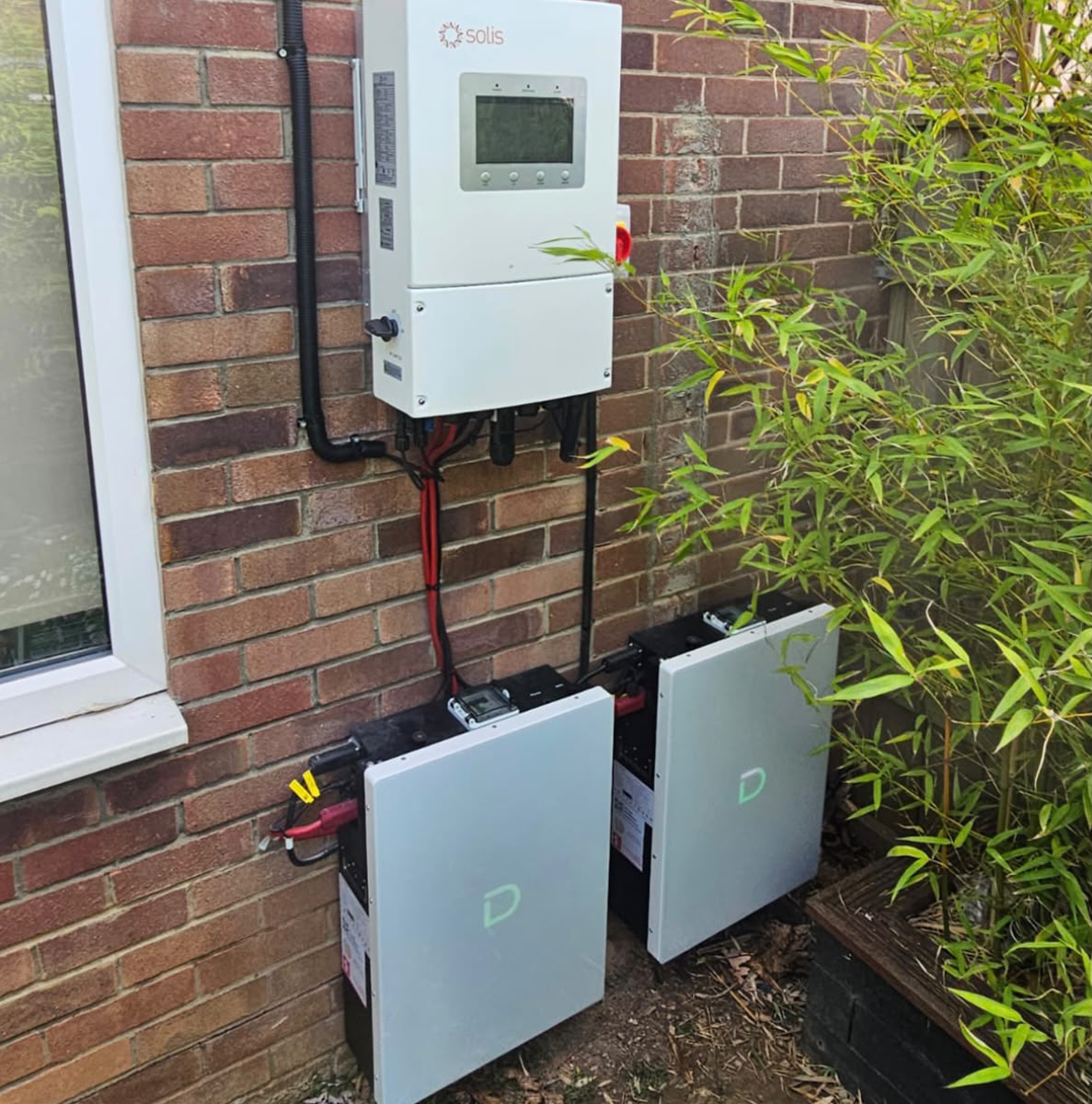
In detail
The technical bit, in plain English.
Batteries are a fast-moving corner of the industry. Chemistries change, warranties change, and manufacturer availability changes. This is what we currently look at when specifying a home battery.
Chemistry: LFP is the current default
Lithium iron phosphate (LFP) has become the standard chemistry for home batteries. It runs cooler, cycles more times before degrading, and is more tolerant of being kept at high state of charge, all useful for a battery that lives on a garage wall in Devon. Older nickel-cobalt chemistries are still around and are not necessarily wrong, but LFP is usually the right starting point for new installs.
AC-coupled vs DC-coupled (hybrid)
A hybrid (DC-coupled) inverter charges the battery directly from the panels without an extra conversion step and is the cleanest design for a fresh install. AC-coupled batteries retrofit onto an existing solar system by charging from the AC side of the existing inverter, slightly less efficient, but often the right pragmatic choice when adding a battery to a system already on the wall.
Sizing to load shape, not to daily total
The right capacity is roughly equal to the electricity you actually shift, the evening and overnight load between when the sun stops generating and when the peak-rate window ends. For most Devon and Somerset households that is somewhere between 5 and 13 kWh of usable capacity. Bigger is not better; bigger simply costs more without earning more.
Backup and gateway integration
Not every battery provides backup power by default. Where backup matters, rural properties, home-workers, medical dependencies, we specify units and gateways designed to island cleanly from the grid and power a defined circuit. This is a design decision that has to be made before the install, not retrofitted after.
Warranties and cycle life
Good LFP batteries carry ten-year manufacturer warranties, often expressed as a minimum end-of-warranty state of health (for example, 60% or 70% of original capacity retained). Cycle life on major-brand units typically runs to 6,000 cycles or more. We check the small print on cycle count, temperature range, and what happens if the manufacturer changes hands.